
When Sulfur Becomes Strategy: Rethinking MKP Production in a Volatile Cost Environment

For a long time, MKP was a relatively easy product to talk about.
You look at the formula — KH₂PO₄. You check the specs — solubility, purity, pH.Then you compare price, maybe lead time, and that’s about it.
But over the past one to two years, the conversation has started to shift.
Customers are asking different questions now. Not always directly, but you can feel it:
Can supply remain stable if raw materials fluctuate?
Why do prices move faster than before?
Why does product consistency vary between suppliers?
If you trace all these questions back, they converge at one point:
How the phosphoric acid behind MKP is actually produced.
MKP Looks Simple — Until You Look Upstream
On paper, MKP is one of the cleanest phosphate salts.
Fully water-soluble. No chloride. Widely used in fertigation and foliar systems.
But what defines MKP is not the final neutralization step.
It is the phosphoric acid that goes into it.
And that is where things become more complicated than they used to be.
Two Paths, One Product — But Different Realities
In practice, there are two fundamentally different ways to produce the phosphoric acid used in MKP:
The wet process
The thermal process
For years, the industry treated them as two separate worlds.
Wet process was about scale and cost. Thermal process was about purity and niche applications.
They coexisted, but rarely overlapped.
That balance is now changing.
The Wet Process: No Longer Just “Low Cost”
The wet process dominates global production, and for good reason.
It is efficient, scalable, and historically cost-effective.
The chemistry is straightforward:
Phosphate rock reacts with sulfuric acid
Produces phosphoric acid and gypsum
But there is one key dependency that is becoming harder to ignore:
Sulfur.
Sulfur sits upstream of sulfuric acid, and sulfur itself is tied to oil and gas refining.
Which means:
Geopolitics
Energy markets
Shipping routes
All start to influence something as downstream as MKP.
In a relatively stable market, this linkage is manageable. In a volatile one, it becomes a risk.
And that is what we are seeing now.
Wet-process phosphoric acid is no longer simply “low cost.”It is increasingly cost-sensitive and externally exposed.
The Thermal Process: Not a Free Alternative
It might be tempting to assume that if wet process becomes unstable, thermal process can simply take over.
In reality, it is not that simple.
The thermal route works differently:
Phosphate rock is reduced to elemental phosphorus (P₄)
P₄ is then combusted to produce phosphoric acid
One of its well-known advantages is purity.
Because phosphorus transitions through a gas phase, most non-volatile impurities are left behind in the furnace slag.
This is why thermal phosphoric acid has traditionally been associated with high-end applications.
But this advantage should not be misunderstood.
Thermal does not automatically mean “pure.”
The final quality still depends on:
The grade of phosphate rock
The control of the phosphorus furnace
The handling and purification of P₄
The combustion and absorption process
In other words:
Thermal provides a higher purity ceiling — but not a guaranteed outcome.
And just like wet process is tied to sulfur, thermal process is tied to another variable:
Energy.
Phosphorus production is highly energy-intensive.Electricity cost fluctuations directly translate into production cost volatility.
So the picture becomes clearer:
Wet process → exposed to sulfur
Thermal process → exposed to energy
Neither path is inherently stable.
Purity Is No Longer a “Process Label”
There is another shift happening quietly in the background.
For a long time, the industry drew a clear line:
Thermal = high purity
Wet = lower purity
But that line is no longer as sharp.
With advances in purification technologies — solvent extraction, ion exchange, multi-stage refining — wet-process phosphoric acid can now be upgraded significantly.
In well-controlled systems, purified wet-process acid can reach very high purity levels, even approaching ranges traditionally associated with thermal routes in certain applications.
Of course, this does not mean the two are identical.
Thermal still offers advantages in structural stability and consistency, especially in extremely high-purity requirements.
But the key point is this:
Purity today is less about which process you choose, and more about how well you control that process.
So What Is the Real Problem?
At this point, the issue becomes less about chemistry, and more about strategy.
If:
Wet process is exposed to sulfur
Thermal process is exposed to energy
And both can achieve high purity under the right conditions
Then the real question is:
How do you maintain stable MKP production in an unstable input environment?
Because for most users of MKP — especially in modern agriculture —what matters is not theoretical purity or occasional low pricing.
It is:
Consistency
Reliability
Predictability
And these are not guaranteed by a single process.

From Choosing a Process to Controlling Both
Traditionally, producers had to choose.
Focus on wet process, or invest in thermal. Optimize one system, and accept its limitations.
That logic is becoming less viable.
A different approach is emerging:
Do not rely on one pathway — build access to both.
This is not about redundancy for its own sake.
It is about flexibility.
When sulfur prices rise sharply → wet process loses its advantage
When energy costs surge → thermal becomes less competitive
If you only operate one route, you are effectively tied to that variable.
If you operate both, you gain room to adjust.
And that changes everything.
What This Means for MKP, Specifically
MKP is often treated as a downstream product.
But in reality, it is highly sensitive to upstream conditions.
Variations in phosphoric acid purity affect compatibility and stability
Fluctuations in input cost affect pricing consistency
Supply disruptions upstream translate directly into delivery risks
So controlling MKP production is not just about blending potassium and phosphoric acid.
It is about:
Controlling where that phosphoric acid comes from — and how stable that source is.
A More Flexible Production Logic
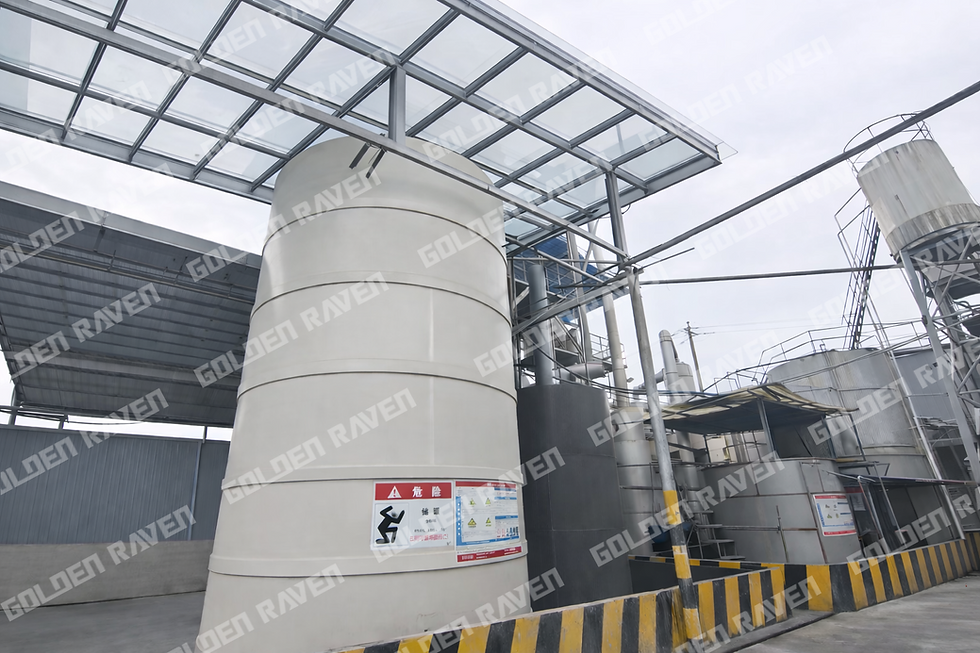
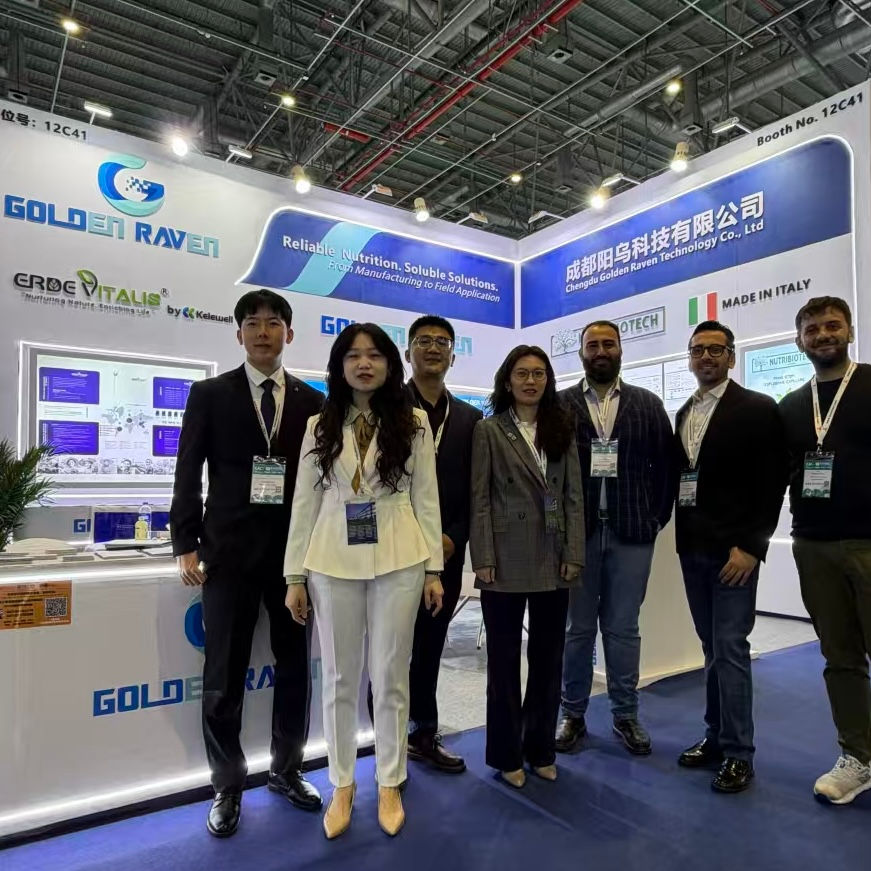
This is the direction we have been moving toward at Chengdu Golden Raven Technology Co., Ltd..
Rather than optimizing a single pathway, the focus has shifted to building a more flexible production structure.
That includes:
Maintaining wet-process capacity for scale and efficiency
Introducing thermal capacity through phosphorus-based routes
Expanding control over upstream inputs
From the outside, this might look like a capacity expansion.
Internally, it is more about structure.
Why Add Thermal Capacity Now
The decision to introduce a thermal pathway is not based on a short-term view.
It comes from observing how the market is evolving.
When sulfur prices move sharply, relying solely on wet process creates pressure.
When energy costs fluctuate, thermal routes become challenging.
But when both exist within the same system, they can offset each other.
At the same time, having access to thermal phosphoric acid allows for:
Better control in high-purity segments
More consistent product performance in sensitive applications
So the intention is not to replace one with the other.
It is to create a system where:
different processes can play different roles under different conditions.
From Cost Advantage to Supply Stability
If there is one clear shift in the industry, it is this:
The conversation is moving away from “who is cheaper” toward “who is more stable.”
Cost still matters, of course.
But cost advantage is often temporary.
Supply stability is not.
And stability does not come from a single strength.
It comes from having enough flexibility to respond when conditions change.
Final Thought
MKP itself has not changed.
The formula is the same. The applications are the same.
What has changed is everything behind it.
Raw material dynamics
Energy dependencies
Production strategies
Which means the difference between suppliers is also changing.
It is no longer just about specification or price.
It is about how the product is made — and how resilient that process is.
And increasingly, the answer is not found in choosing the “right” process.
But in having the ability to work across more than one.


Comments